India has built the world’s most successful real-time payment system. Fraud has grown with it. Look closely at how most of it happens and a pattern appears: the fraudster rarely breaks anything. They obtain something.
The factors we rely on can all be handed over
- OTPs are read out to “bank officials”, forwarded by malware or captured through SIM swaps.
- PINs are watched, guessed or asked for.
- Card data leaks from breaches and skimmers.
- Device biometrics confirm whoever is holding the phone, and a phone can hold several enrolled fingerprints. The bank never sees who actually touched the sensor.
Each of these checks is about a code or a device. None of them is about the customer.
Move the check to the bank
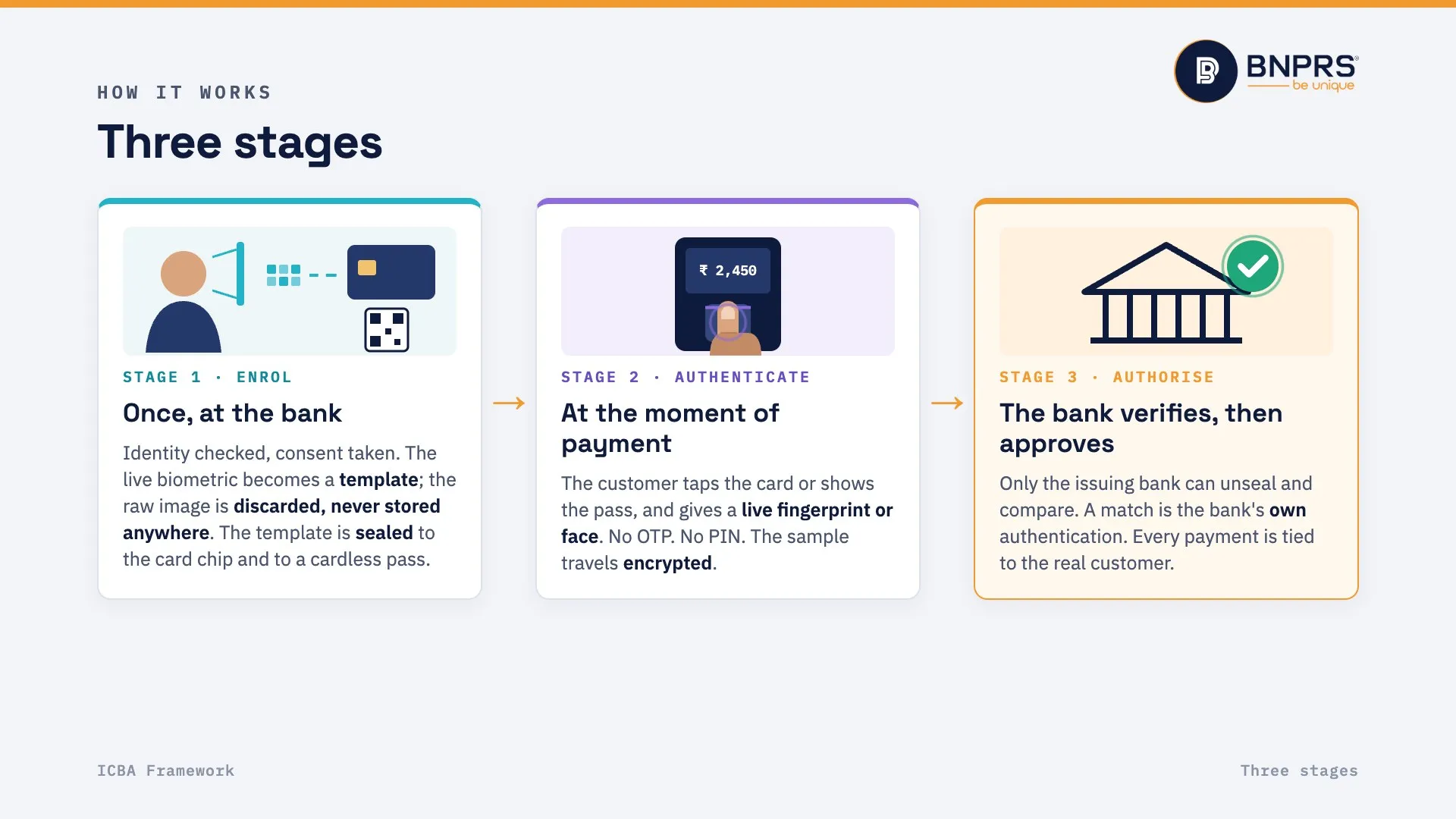
The ICBA Framework (Issuer-Controlled Biometric Authentication) changes who checks the person. The issuing bank, the party that opened the account and knows the customer, enrols the customer’s biometric once and keeps control of it. At payment time a live fingerprint or face sample travels encrypted inside the payment itself, and the bank compares it with its own template before it approves.
There is nothing to remember and nothing to share. A fraudster who has the card number, the OTP and the PIN still does not have the customer’s live finger.
What it takes
This is not a new payment network. ICBA uses the messages, cards and terminals the industry already has, adds a biometric sample where the PIN or OTP used to be, and puts the decision where it belongs: with the bank.
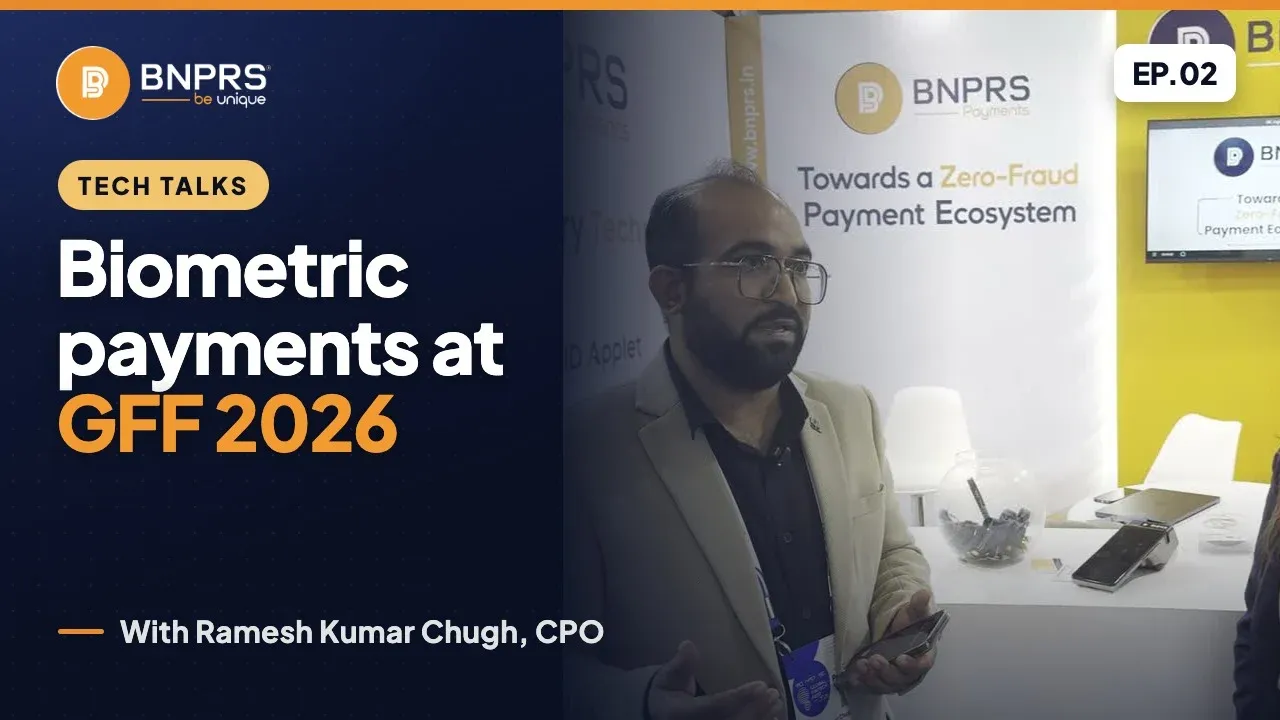
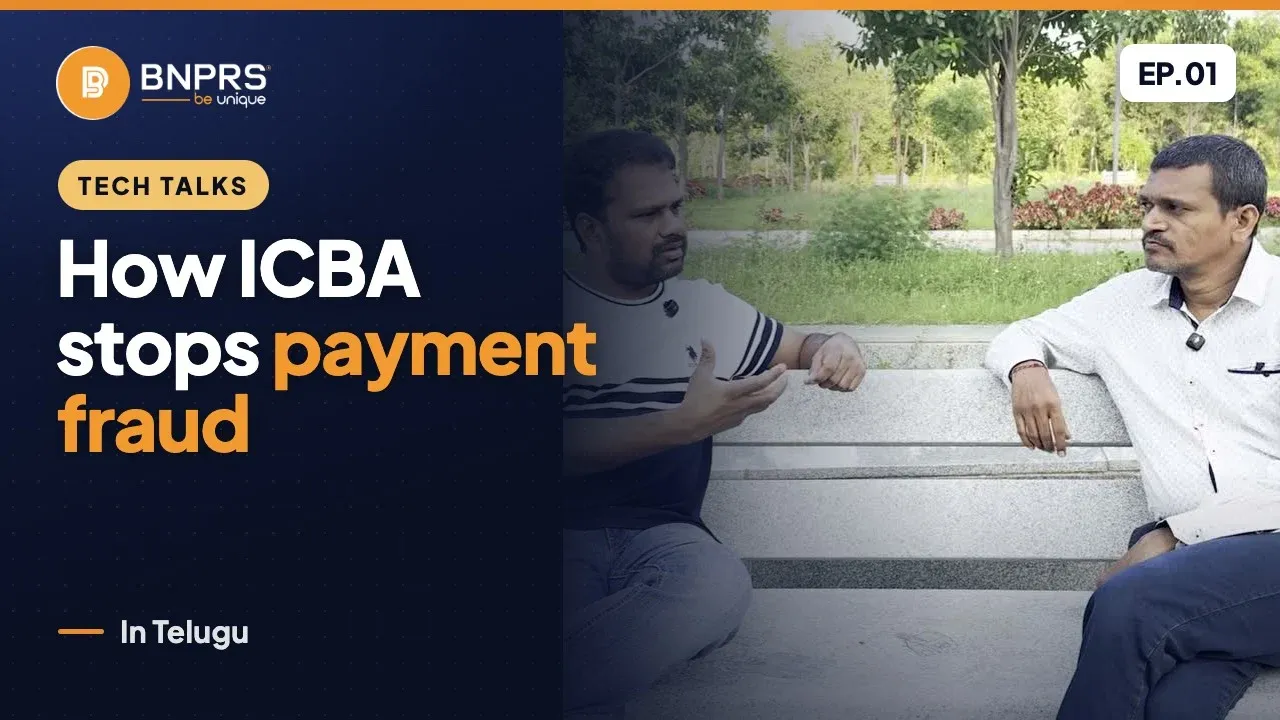
The video above, made for the Global Fintech Fest 2026, shows the idea in two minutes. For the full picture, read The ICBA Framework, explained.